Sunday, July 4, 2021

The Glens


Watkins Glen State Park

Sometimes there are words in English that we take for granted and do not ponder the etymology or full meaning of it. Glen, a term used to describe narrow valley in the mountain districts of Scotland and Ireland, was one of those words for me. Since the appearance of the word in English in the sixteenth century, it has been applied further afield, including in the Finger Lakes region of New York.

Voted as the third-best state park in the United States in 2015, Watkins Glen, with its many waterfalls and accessible location, is a popular destination. Its popularity has not detracted from its beauty, but the sheer volume of visitors can make the photographer frustration frustrated looking for the perfect shot of a waterfall. Long and narrow, the park encompasses the glen created by Glen Creek, which is a name that seems somehow redundant given the definition. The most popular trail in the park, the Gorge Trail, is a mile-and-a-half long and surveys 19 waterfalls. I do not think it enters most of the visitors’ minds that there is a 500-foor change in elevation over the course of the trail. Thus, at the upper end of the trail, bedraggled people who are not accustomed to walking, or wearing inappropriate shoes for the occasion, area readily evident struggling to finish the trail.


We drove the picturesque route between Seneca Falls and the village of Watkins Glen, not realizing that there was a lot of farmland and not many places to stop for services. As we approach the south end of Seneca Lake, we passed winery after winery, with an occasional brewery thrown in, with gorgeous views of the valley and the lake. One can only imagine that the weekends during the summer were incredibly busy. After research, I had decided to enter at the park’s upper entrance. A nice location, with large shade trees and away from the crowds of the main entrance. As a result, for the most part, we were walking against the line of people, downstream as it were. People could catch a tram from the upper parking lot to the main entrance, thus the traffic downstream was not as significance. We could enjoy the falls without increasing fatigue from a steady upward climb.


Arriving at the park’s main entrance, which is adjacent to the center of the village, signs illustrate the history of the park and area. The state park, as we know it today, was originally developed opened by George Freer, a private entrepreneur, with the marketing of newspaper editor Morvalden Ells, on 4 July 1863.   After another owner, the State of New York acquired the land in 1906, and took over the operation of the park in 1911. After a devastating flood in 1935, prompted by 12 inched of rainfall in three hours, the park was rebuilt by the Civilian Conservation Corps, which was largely responsible for the bridges and paths that walkers on the Gorge Trail use today.

Of course, prior to that, the land was part of the indigenous Seneca homelands, who fished and farmed the area as part of the larger Iroquois (Hodinöhsö:ni’) Confederacy.  With the arrival of European colonist, conflict and hardship ensued, and the land gradually became the possession of the white people. This history is recognized, no doubt belatedly, with a statue of a Seneca man and woman near the main entrance of the park.  

The South Rim trail would be an interesting walk because it is part of the 584-mile Fingers Lake Trail, running from the Catskills in the east to the Allegheny National Forest in western New York. But this would not have taken us back to our car. Instead, we decided to take the North Rim Trail back, which until recently known as “Indian Trail,” perhaps the name change is a nod toward more cultural sensitivity. The trail begins with steps that lead to the rim of the gorge with views of the creek and trail running below, then a gradual ascent back to our parking spot. It was devoid of most people; however, we encounter a few walking their dogs who are not allowed on the Gorge Trail. The trail offered an opportunity for quiet reflection that the rushing waters, with the adrenaline rush that inevitably develops, and the large number of people do not. Emerging from months of social distancing, it is difficult to transition back to crowded noisy places. Besides, we enjoyed the chipmunks darting back and forth and squealing in angst and nervousness as we approached.

After our hike we wandered in the village for a little while, finding an old movie theater, a depression era post office with its artwork removed, and a series of small shops. Working our way back toward Moravia and Skaneateles, we serendipitously saw Ithaca Falls and pulled over to explore. The creek supplied power to several industries in the early nineteenth century, and easily accessible by foot, but finding a parking spot was more challenging. A little further we stopped at a relaxing brewpub, Salt Point Brewing Company, for pizza and appetizers in the early evening.

Ithaca Falls (Ithaca, NY)


The following day found us at Fillmore Glen, a lesser known although intriguing state park in Moravia. Named after the thirteenth president of the United States, Millard Fillmore, the park sits near the southern end of Owasco Lake. Fillmore was president during the early 1850s and was the last person from the Whig party to serve in the office. Later, he joined and became a leading figure in the American Party as its nominee during the 1856 election. The party was popularly known as the “Know-Nothing” Party. The core tenants of the party were anti-immigrant and particularly anti-Catholic policies. During the time of increased Irish immigration, largely because of the 1840s Famine, the Know-Nothings sought to deny entry and citizenship fearing an undermining of American culture, religion, and wellbeing. When asked about nativism, party members were instructed to reply that they “knew nothing” of the particularly reprehensible views about Irish and Catholics.

The Cow Sheds' (Fillmore Glen State Park)


None of this history is recounted in the park. Instead, a replica cabin of Fillmore’s boyhood home sits largely disregarded by most visitors. The primary attraction of the park is the beautiful gorge, lightly traveled, with several waterfalls feeding Owasco Lake. In terms of states parks, Fillmore Glen is a nice counterpoint to Watkins Glen. Quiet, uncomplicated, with abiding beauty, it offers challenging hikes because of the landscape and the opportunity to observe and reflect.


Friday, July 2, 2021

The Glen Theater (Watkins Glen, NY)


The Glen Theater (June 2021)

Opened in 1924 and in operation well into the twenty-first century. The building next door was acquired for a second screen relatively recently. According to local sources, the cinema closed in 2019. When I visited in June 2021, it did not look permanently closed. But in the aftermath of the pandemic, it is difficult to discern what might happen.

The theater, which is just a few blocks from Seneca Lake, appears not to have been affected by the devastating fire that destroyed nearly half of the business district of the village in January 1934.


United Theatre (Westerly, RI)


Located on Canal Street in Westerly, just yards from the Connecticut border, the United opened in 1926. It served the community until 1986, when it closed. After a few missteps, the theater was reopened in 2014 and continues to show films (opened after the pandemic).

Location: 5 Canal Street, Westerly, RI

Saturday, June 26, 2021

Colonial Theater (Moravia, NY)


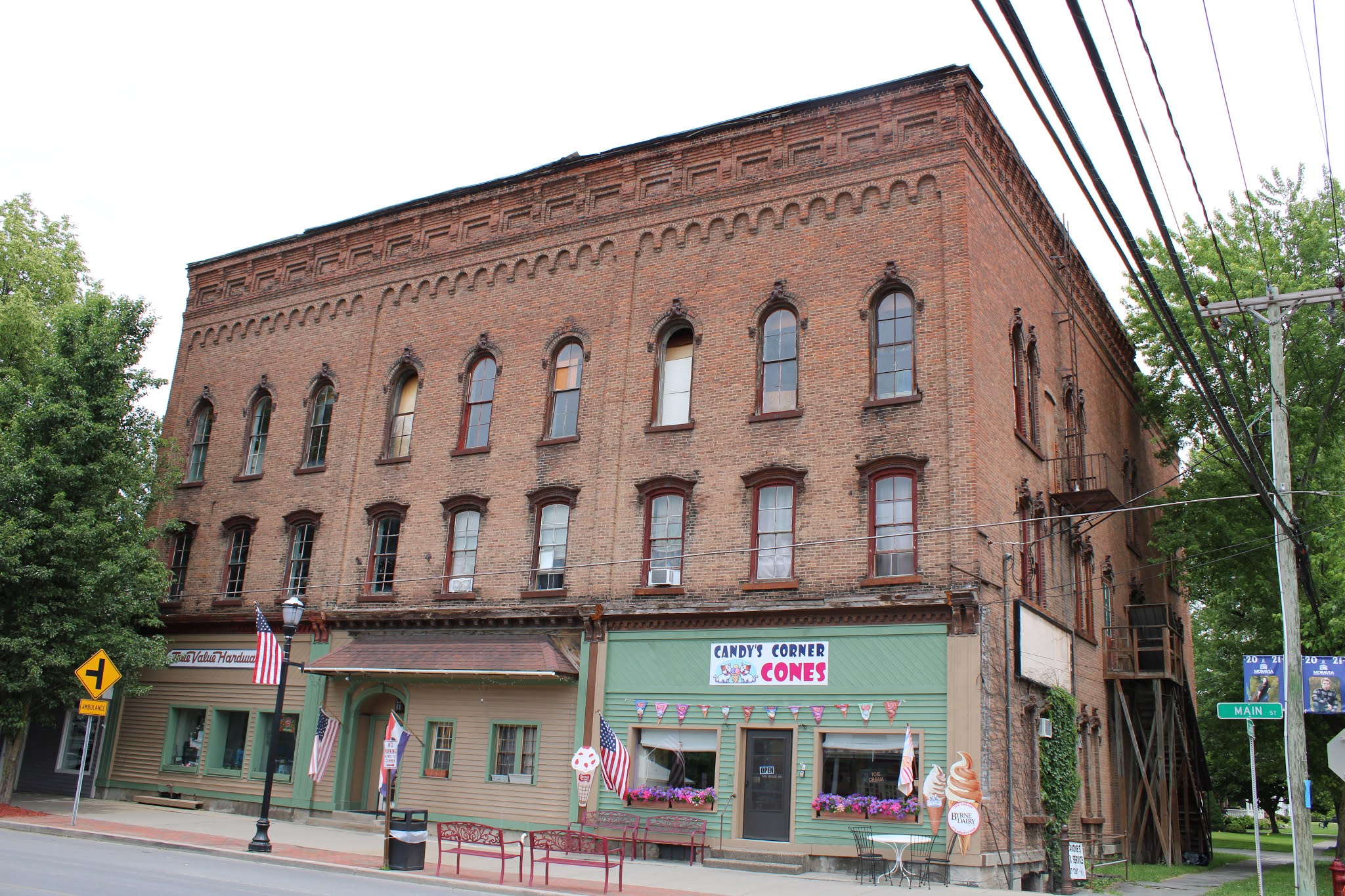
The building that once housed the Colonial Theater at the corner
of Main and Church Streets in Moravia

Located on Main Street, the Colonial Theater was once located within this building. An advertisement from 1948 provides the only dates that I am aware of when the theater was open.

A longtime Moravia resident told me that when she was a little girl, she would go to the Colonial on Saturday afternoons to see a Western, “for next to nothing.”

An advertisement from the 1948 high school yearbook


Wednesday, June 23, 2021

Carpenter Falls


Sunday evenings, when I was a kid, was usually reserved for television with a bevy of family shows. Among my favorites was Mutual of Omaha’s Wild Kingdom with Marlin Perkins and Jim Fowler. Perkins was twenty-five years older than Fowler, and frequently the show seemed to suggest that the latter was doing most of the active work on the expeditions into the wild. I remember one comedian quip in Marlin’s voice, “I was making coffee, while Jim was wrestling an alligator.” Jim Fowler later insisted that it was erroneous to think that it was the case, instead saying that because there was only one camera filming the episodes.

Nevertheless, I could not help but think Marlin and Jim while we explored the Carpenter Falls near Skaneateles Lake. Carpenter Falls is a ninety-foot drop on Bear Swamp Creek, less than a mile before it empties into Skaneateles Lake. The creek cuts a deep gorge, making it and the falls hard to access. The access point for the falls is from Appletree Point Road, off NY41A. A small parking lot with no information has two paths running from it. The path seemingly offering the most direct access is treacherous, and near the falls, has a rope that acts as a makeshift handrail. While we could have attempted the dangerous steep descent into the gorge, returning via that path was not feasible. We returned to the parking area, less than a quarter of a mile, to take the other trail, a less direct path but more manageable. Although it was still step and a tumble into the gorge and creek was not out of the question.

Carpenter Falls


Once we accessed the creek, the only way to get an unobstructed view of the falls was by traversing the slippery rocks protruding from the creek. With only tennis shoes, Angie declined to get closer. Ever the one to try to get a better photograph, I hopped from rock to rock to get closer. Although the angle of sun made a great shot difficult, getting close and having the roar of the water ringing in my ears was great fun. Angie photographed me as I carefully navigated the rocks. In the middle of the creek, I was reminded how treacherous nature could be. Wedged between some rather large rocks, I espied the carcass, little more than the skin, of a red fox. What happened, I wondered. Did it get caught in the torrents of the water, or did its body simply wash into the creek? We, and our cats, lead sheltered lives I concluded.

Fungi growing on a log in the middle of the creek


After our adventurous trek, we wandered down Appletree Point Road toward Carpenters Point on the lake. The lightly used road took us by the adjacent farm fields. It was a pleasant walk on the last day of spring. Wildflowers and birdsong marked our post-falls exploration. There was no direct access to the lake without violating someone’s property, but it was a different way to experience the lake area.


Secluded and rural, the walk stood in contrast to the one through the gorge at Watkins Glen, where there where far more falls and people. This walk offered challenges but also time to reflect and enjoy as well.


Navigating the trail to the falls

Admiring the falls

Skaneateles Lake from Carpenters Point

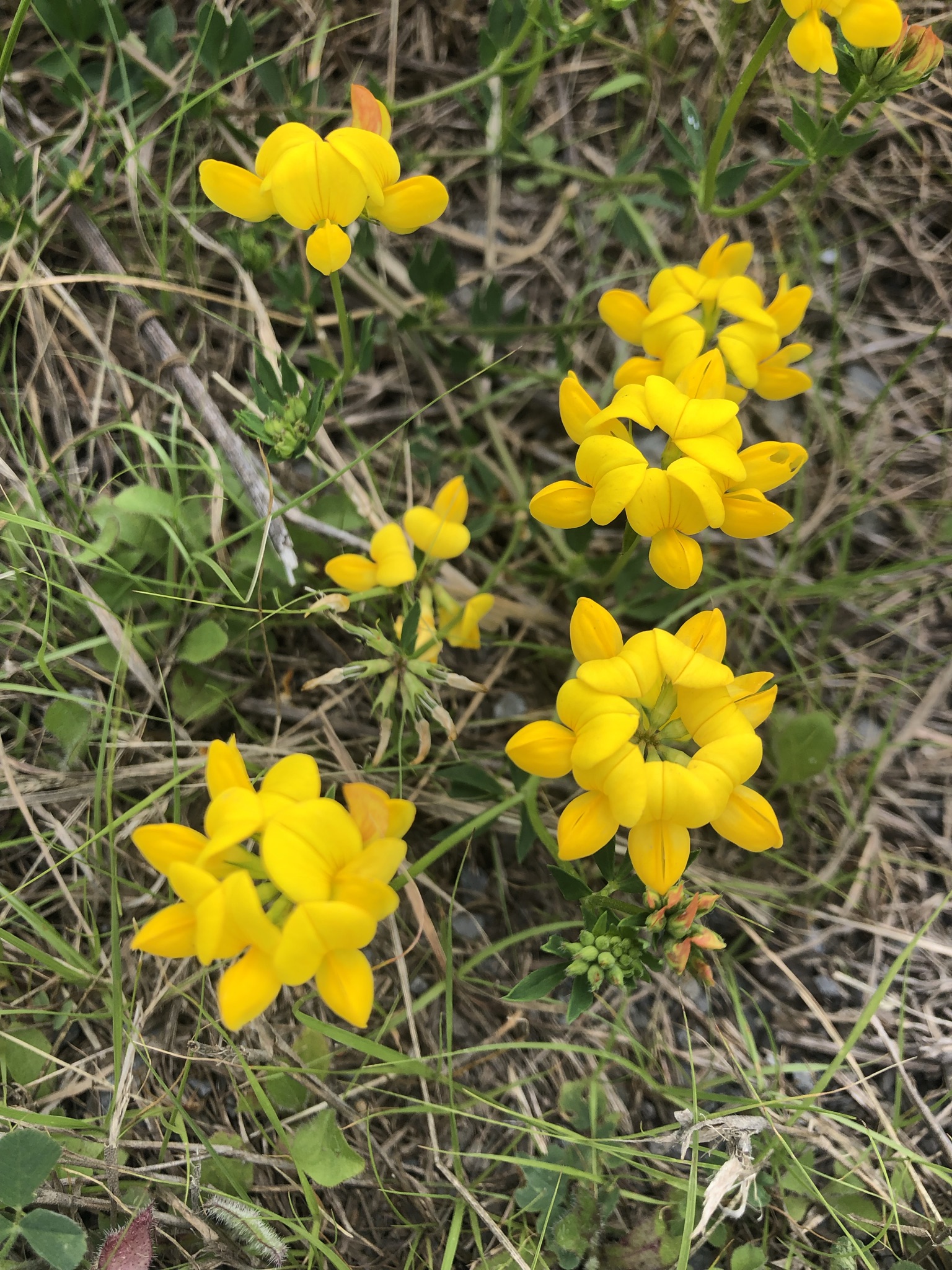
Birdsfoot trefoil that lines the road

A song sparrow singing in the surrounding fields


Tuesday, June 22, 2021

Auburn-Fleming Trail (Auburn, NY)


Located southeast of the city of Auburn, New York, the Auburn-Fleming Trail is located on an abandoned railway bed that crosses steams and is surrounded by wetlands. Consequently, the insects can be particularly ferocious during the summer. This is the second time I walked the trail. The previous time in 2019, I did not encounter anyone on it. This time, I saw one runner who seemed as surprised to see me, as I him. Wildlife, too, are not used to human presence. I spooked a blue heron at one of the three creek crossing, which in turn startled me as well.

One of the small bridges using trestles from the railroad

Although at the northern terminus there is quite a bit of trash and debris, further from the beginning of the trail it seems hardly used. There are several signs within just a few feet of the trail asserting private property. The trail was part of an interurban trolley line and on the northern end several railroad ties are visible, partially buried. I like the trail because it feels remote, and unexplored. It is maintained by a snowmobile clubs, suggesting to me that reveals its primary use. But as I am an infrequent visitor, that could be an erroneous assertion.

Railroad ties barely protruding to the surface

Running for about one-and-one-half miles, the trail stretches south from Dunning Avenue in Auburn to NY Route 34 near Shumaker Crossing.


Saturday, June 19, 2021

Colonial Theater (Skaneateles, NY)


Legg Hall was a portion of the second floor that was added to the existing building in 1868. It was used for traveling shows, local productions, basketball games, as well as for roller skating. As silent films became more popular across the country, the space became known as the Huxford Theater the 1910s. In 1940 or 1941, the theater changed its name to the Colonial and a new marquee was installed. After the Colonial was closed in 1977, the second floor was converted to condominiums and the marquee was removed. Today, the building look much like it did in the 1940s, although the façade of the building is somewhat obscured by the trees that line the sidewalk.