Jonathan Franzen has said that
birds are humans’ constant companion; they are everywhere. Little do we realize
they provide a soundtrack to our life. Whether we know it or not, their songs,
cries, calls, and activities are constantly with us, especially while outside.
When I wake up in the morning, the sound of birds fills the air. At night, the
gentle call of owls, which I never see, echo through the otherwise quiet night.
As April wears on, the foliage
of the back of our property begins to fill out. During the first year after we
first moved into our house, Patricia saw lights in the distance of the beyond
the trees and field that adjacent to the train tracks. She looked at the lights
and sighed slightly and commented on “the lovely lights of the city.” I gently
told her that it was Walmart. We laughed. The lights of the city are one
of the private ways we measure the changing of the seasons. Angie looked out
the back window and noted that the lights of the city are gradually fading.
Downy Woodpeckers – While
walking it is difficult to distinguish between the downy and hairy woodpeckers.
Their plumages look remarkably similar; however, the downy are a little
smaller, measuring about six inches in length, as opposed to the nine inches of
a hairy woodpecker. Harder to see from a distance is that the bill of the downy
is shorter and thinner to that of the hairy.
Angie put out the hummingbird
feeder to attract scouts that should be arriving in our area soon. We
moved the suet feeder, usually stocked with cakes that attract woodpeckers, to
the bedroom side of the house. The next day a downy was coming to the sunflower
seed feeder to take a single seed and retreat to the tree line. I wanted to
explain that the feeder for her and the other woodpeckers had moved about 25
feet away.
I watched a pair of down
woodpeckers, a male and a female, seemingly play a game of hide and seek around
the truck of a tree in the front yard. As one moved around the trunk, the other
kept diametrically opposed, as each gradually got further off the ground. When
they reached the branches, first one, then the other, floated back down to the
ground to start again. I watched them scale the tree three times before flying
off into the backyard.
 |
| Nesting robin on Longview Drive |
American Robins – They seem
to be everywhere during the spring months in Pennsylvania, but they do not go
anywhere, American robins are just more noticeable. They are ubiquitous. Every
yard seems to have robins searching for food or sparring over territory. Angie
likes to say that they are “love drunk.” It may be an apt description. During
the spring robins take chances and do foolish things. It is not uncommon to see
the bodies of robins who have been hit by cars or met with other disaster. I
would say more often than other species that are commonly seen here.
 |
| A discarded robin's egg. |
Sometimes I think there are so
many that pairs have difficulties finding a place to build a nest. For a couple
of years, we had a female trying to build a nest on the topside of the motor housing
of our outside ceiling fan on the back porch. Even with wind, the nest was
problematic as the motor assembly is rounded. When the wind blows, and the
blades of the fan start to turn, what remained of the straw and grass ended up
on the porch. On our walks through the neighborhood this spring, Angie spied a
robin nesting on a utility box of the side of the house. The nest is strategically
located beneath the overhang of the roof, she and her nest are protected north
winds as strong showers have meant for a cool, wet and dreary season. I have
been checking on her during my daily walks and it appears that the chicks may
have hatched by late April since it is the first time that I have not seen her
on the nest in more than a week. In the neighborhood, if we look down, hatched light
blue eggs can be found everywhere.
 |
| Northern Mockingbird |
I enjoy watching robins scour yards
for food. With their heads cocked at an angle, folklore suggested that the birds
were listening for worms. But the head parallel to the ground allows them to see
much better.
Northern Mockingbirds – I
have come to admire mockingbirds, with their outgoing personality and seeming
oblivion to anything else. It is amusing to watch northern mockingbirds
struggle with the suet feeders.
 |
| Carolina Chickadee |
Carolina Chickadees – The
species, which is prevalent in southern Pennsylvania, is indistinguishable from
the black-capped chickadee, except in song. The two birds will mate with one
another where their areas overlap.
Brown Thrashers – The
males of the species have the largest documented song repertoire in North
America with over a thousand songs. They are not frequent visitors to our
backyard, but I did manage to catch a glimpse of one, on the ground, near our
feeder.
Angie gave me a bee nester for
my birthday, which I hung it in the apple tree to see what happens. It
is designed for native bee species that are primarily for pollinators rather
than generating honey. Regardless of whether bees will find and use it,
currently it is aesthetically pleasing.
Late one Sunday morning, a pair
of wild turkeys apparently wandered through our backyard. We did not see the pair,
but our neighbors (Tom and Kay) direct messaged Angie to alert us. Alas, she
did not see the message until the evening. But I find myself taking a peek at
the backyard on the off chance that they make another appearance.
 |
| White-throated Sparrow |
20 species observed: American Crow, American
Goldfinch, American Robin, Blue Jay, Brown Thrasher,
Carolina
Chickadee, Carolina Wren, Common Grackle, Downy Woodpecker, European Starling,
House Finch, House Sparrow, Mourning Dove, Northern Cardinal, Northern
Mockingbird, Red-bellied Woodpecker, Tree Swallow, Tufted Titmouse,
White-breasted Nuthatch, White-throated Sparrow.
 |
| Apple blossoms |
 |
| A female cardinal in our apple tree |
 |
| The Moon and Venus in the evening sky |


 Seeing large numbers of anything
is impressive. In a time in which much of the ecosystem is imperiled, observing
an extraordinarily large number of snow geese wintering in rural Pennsylvania
offers hope for the future of birds and animals. Nature is resilient, yet the lake
at the Middle
Creek Management Area, along the borders of Lancaster and Lebanon counties,
were created when a dam was built in the 1970. The geese, which once used the
east coast as navigation, have moved further inland as development has reduced feeding
areas. The phenomenon of extraordinary numbers of birds gathering in central Pennsylvania
is a reaction to human pursuits.
Seeing large numbers of anything
is impressive. In a time in which much of the ecosystem is imperiled, observing
an extraordinarily large number of snow geese wintering in rural Pennsylvania
offers hope for the future of birds and animals. Nature is resilient, yet the lake
at the Middle
Creek Management Area, along the borders of Lancaster and Lebanon counties,
were created when a dam was built in the 1970. The geese, which once used the
east coast as navigation, have moved further inland as development has reduced feeding
areas. The phenomenon of extraordinary numbers of birds gathering in central Pennsylvania
is a reaction to human pursuits. 
 The close proximity to so many birds
is humbling. It is almost as if the geese are nearly tame, yet they are not
exactly ready to cozy up to people. Even
a small toddler, rambunctious and reckless as he is, gets remarkably close to
the geese scouring the grass. The geese are not easily spooked but mosey off if
humans (or dogs) venture too close.
The close proximity to so many birds
is humbling. It is almost as if the geese are nearly tame, yet they are not
exactly ready to cozy up to people. Even
a small toddler, rambunctious and reckless as he is, gets remarkably close to
the geese scouring the grass. The geese are not easily spooked but mosey off if
humans (or dogs) venture too close. 


 Between mile markers 139 and
140, the Pump House was a part of the U.S. Steel Homestead Steel Works and is
now an interpretive center for the 1892 Homestead Strike Memorial. The strike
was a defining clash between steelworkers and industrial management, pitting
the Amalgamated Association of Iron and Steel Workers (AA) against the Carnegie
Steel Company with its local operator, Henry Clay Frick. Company under Frick sought
to break the union in Homestead, introducing non-union clauses into the workers
contract, leading to a confrontation when the existing collective bargaining contract
expired. On 1 July 1892, Frick locked out workers who moved to keep the plant
closed through surveillance and picket lines, attempting to deny the company an
opportunity to employ replacement workers. The standoff resulted in a pitched
battle between the union and Pinkerton agents on 6 July, when Pinkerton agents attempted
to land a boat on the grounds of the plant from the Monongahela. Shots erupted
and a ten-minute gunfight ensued. The governor of Pennsylvania sent the state
militia to restore order. The strike melted away as workers, primary East
European immigrants, crossed the picket line. The incident broke the AA; by
1900 not a singled steel plant in Pennsylvania would remain unionized.
Between mile markers 139 and
140, the Pump House was a part of the U.S. Steel Homestead Steel Works and is
now an interpretive center for the 1892 Homestead Strike Memorial. The strike
was a defining clash between steelworkers and industrial management, pitting
the Amalgamated Association of Iron and Steel Workers (AA) against the Carnegie
Steel Company with its local operator, Henry Clay Frick. Company under Frick sought
to break the union in Homestead, introducing non-union clauses into the workers
contract, leading to a confrontation when the existing collective bargaining contract
expired. On 1 July 1892, Frick locked out workers who moved to keep the plant
closed through surveillance and picket lines, attempting to deny the company an
opportunity to employ replacement workers. The standoff resulted in a pitched
battle between the union and Pinkerton agents on 6 July, when Pinkerton agents attempted
to land a boat on the grounds of the plant from the Monongahela. Shots erupted
and a ten-minute gunfight ensued. The governor of Pennsylvania sent the state
militia to restore order. The strike melted away as workers, primary East
European immigrants, crossed the picket line. The incident broke the AA; by
1900 not a singled steel plant in Pennsylvania would remain unionized. One of the interesting things
about Pittsburgh is the proliferation of ethnic clubs in the area. In Homestead,
the Hungarian Social Club is visible from the trail, but appears to be closed.
One of the interesting things
about Pittsburgh is the proliferation of ethnic clubs in the area. In Homestead,
the Hungarian Social Club is visible from the trail, but appears to be closed.


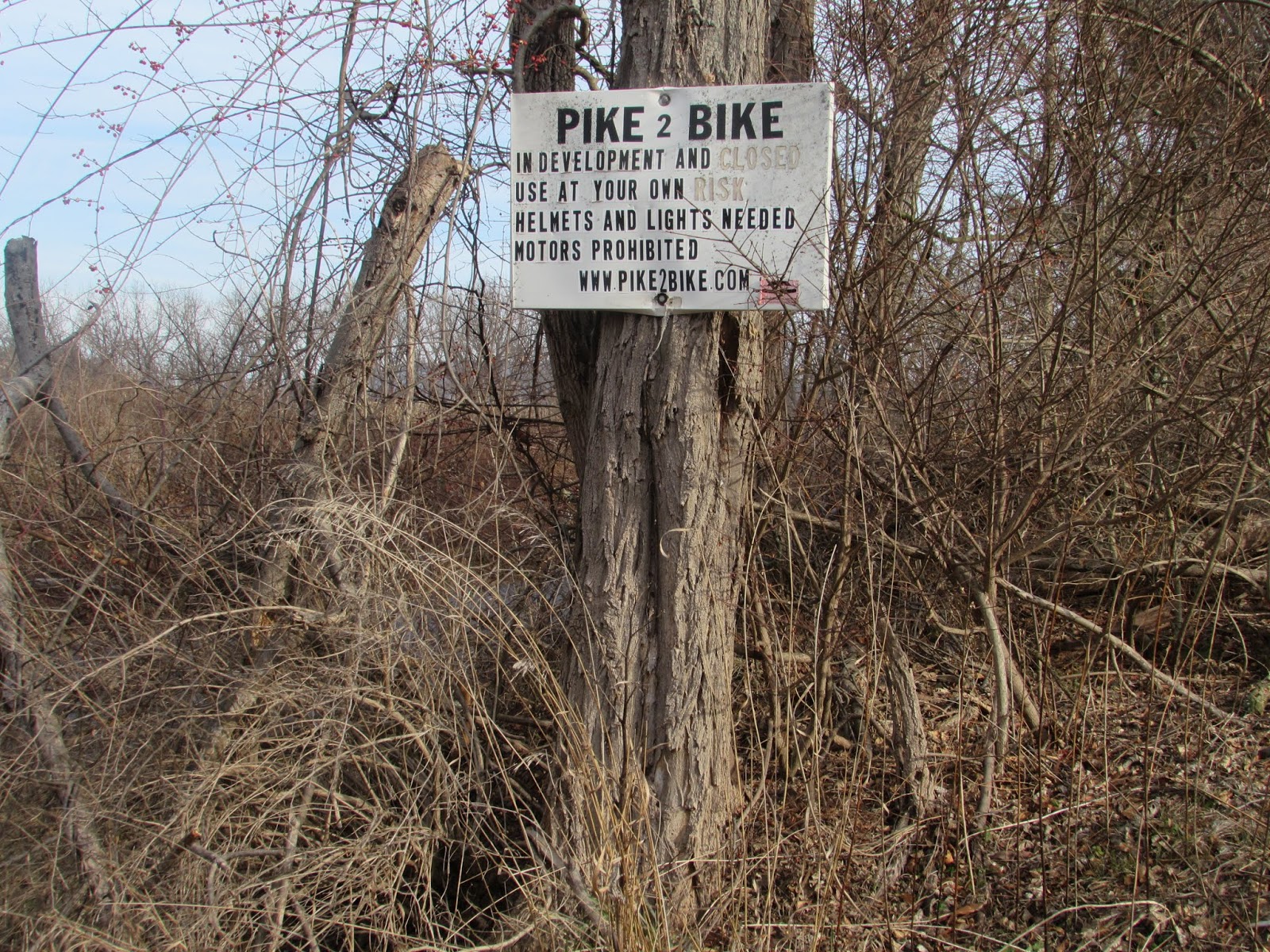
 The unincorporated town of
Breezewood is an odd phenomenon. A federal law, that is no longer in force,
insisted that federally funded highways could not lead directly to toll road;
thus, motorists on Interstate I-70 must exit, transit through a maze of filling
stations, hotels and restaurants before entering the Pennsylvania Turnpike. The
rationale was to allow
drivers the option not to use a toll road; however, today the lack of
interchange creates a bizarre and confusing traffic jumble that needs to be
navigated. If, as once happened to me, you are unlucky enough to have an
accident or partial shutdown of the turnpike, Breezewood is a nightmare.
The unincorporated town of
Breezewood is an odd phenomenon. A federal law, that is no longer in force,
insisted that federally funded highways could not lead directly to toll road;
thus, motorists on Interstate I-70 must exit, transit through a maze of filling
stations, hotels and restaurants before entering the Pennsylvania Turnpike. The
rationale was to allow
drivers the option not to use a toll road; however, today the lack of
interchange creates a bizarre and confusing traffic jumble that needs to be
navigated. If, as once happened to me, you are unlucky enough to have an
accident or partial shutdown of the turnpike, Breezewood is a nightmare. 


 On my walk on the Cumberland Valley Rail Trail, I have met a group of barn cats near Ott Road over the last few months. An expectant mother cats was especially friendly during the summer. But on a mid-November Friday afternoon, two different cats carefully watched me as I walked by, while a third lurked in the underbrush several feet further away. The tortoise shell lingered, hiding behind some bushes; a blank-and-white shorthair was a little braver and stood on a large boulder eyeing me keenly. I squatted in a catcher’s stance for a couple of minutes to see if either were brave enough to come to me. A downy woodpecker tapped out a steady rhythm on a nearby tree, while a blue jay cried in alarm overhead. Both cats waited patiently as I remained quiet and watched. The black-and-white felt comfortable enough to lie down and begin to doze. Both were probably expecting something to eat, and I contemplated whether I should bring a small bag of cat food the next time I walk this section of the trail.


